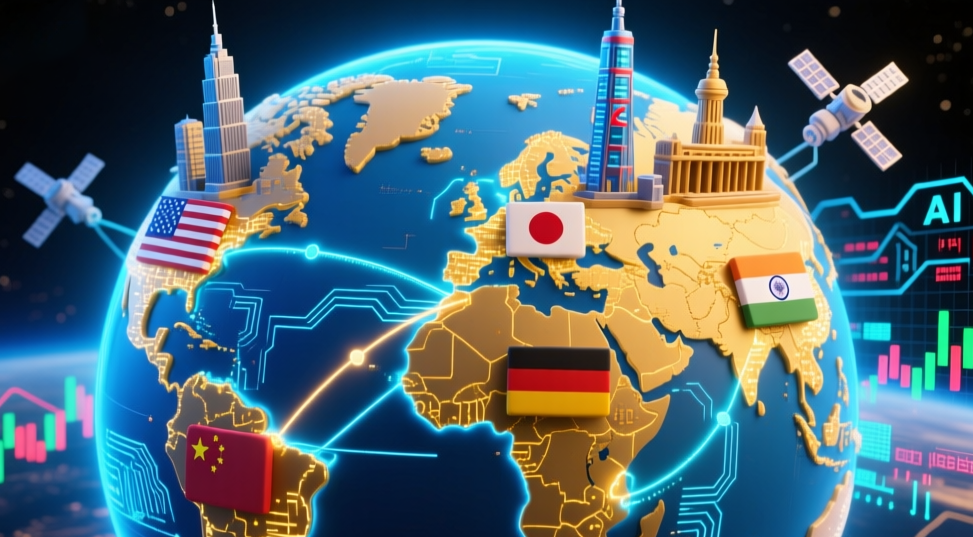
Top Economies 2025: The Interconnected Race for Global Economic Leadership
The top economies of 2025 are reshaping the future of international trade, investment, and prosperity. Understanding which nations dominate the global economic landscape and how their economies interact is critical for investors, policymakers, and business leaders navigating an increasingly complex world.
The battle for economic supremacy has never been more intense, with emerging powers challenging established leaders and technological innovation disrupting traditional hierarchies. According to International Monetary Fund (IMF) projections, global GDP is set to exceed $120 trillion (nominal) by 2025, with innovation, AI-driven industries, and digital transformation acting as major engines of expansion.
The 5 Dominant Top Economies 2025 Powerhouses:

1. United States: The Unstoppable Economic Powerhouse Leading Top Economies 2025
The United States maintains its dominant position as the world’s largest economy in 2025, commanding a staggering GDP of nearly $28 trillion. As the undisputed leader among top economies in 2025, America’s strength lies in innovation, consumer spending, global financial dominance, and technological supremacy. The U.S. remains home to the largest stock exchanges (NYSE and NASDAQ), and continues to attract international talent across industries.
Key Growth Drivers Powering the US Economy
Technological Innovation and AI Revolution: American tech giants like Apple, Microsoft, and Google are projected to add over $2 trillion to U.S. productivity by 2030 through generative AI, robotics, and automation solutions.
Silicon Valley Innovation: The tech sector continues revolutionizing industries from artificial intelligence to biotechnology, creating trillions in market value and positioning America as the global innovation hub.
Consumer Economy Strength: U.S. consumer spending accounts for approximately 70% of total economic output, making it the world’s most powerful economic engine and a critical driver of global demand.
Financial Market Dominance: Wall Street remains the global epicenter of investment, with the deepest and most liquid financial markets on Earth.
Capital Markets Supremacy: Major financial institutions and investment firms drive unprecedented capital flows and shape global monetary policy.
Dollar Dominance: The U.S. dollar serves as the world’s primary reserve currency, providing unmatched financial leverage and economic influence.
Critical Challenges Threatening US Economic Stability
Despite its dominance, America, among the top economies in 2025, faces mounting pressures that could undermine long-term growth and stability:
Rising National Debt: Expected to surpass $35 trillion, creating concerns about fiscal sustainability and future economic flexibility.
Political Polarization: Deep partisan divisions threaten policy stability and international credibility, potentially undermining investor confidence.
Soaring Public Debt Burden: High government debt levels could constrain future spending on infrastructure and social programs, limiting long-term fiscal sustainability.
Inflation Concerns: Despite moderating from 2022 highs, inflation remains above the Federal Reserve’s 2% target, requiring continued vigilance in monetary policy.
Key Performance Numbers for the US Economy
- 2025 GDP Projection: $28 trillion, placing it firmly atop the top economies 2025
- Stock Market Cap: Over $50+ trillion in global market capitalization
- Unemployment Rate: Historically low at 3.8%
- Technology Share: Approximately 30% of total economic output
- Federal Reserve Monetary Policy: Interest rate decisions continue to influence global interest rates, currency values, and investment flows
Learn more about US economic data at the International Monetary Fund.
US Global Economic Ranking: #1 among top economies 2025 (Source: IMF, World Bank, OECD rankings)

2. China: Asia's Unstoppable Economic Juggernaut in Top Economies 2025
China stands as the world’s second-largest economy, wielding a massive GDP exceeding $22 trillion in 2025. As a cornerstone of top economies 2025, Beijing’s manufacturing dominance, enormous domestic consumer market, and ambitious Belt and Road Initiative fuel its relentless pursuit of global economic leadership. China’s strategic pivot toward high-tech manufacturing, electric vehicles, and renewable energy sectors directly challenges Western technological superiority.
Growth Drivers Fueling China’s Economic Expansion
Advanced Manufacturing Hub: China produces 30% of global manufactured goods, from smartphones to solar panels, cementing its position as the world’s factory.
Export Powerhouse: Chinese products dominate international markets with $3.5+ trillion in annual exports, driving global trade flows.
Rapid Urbanization: Over 850 million urban population creates massive infrastructure and consumption opportunities, fueling sustained domestic growth.
State-Led Development: Government-driven investment in strategic industries like semiconductors, renewable energy, and aerospace accelerates technological advancement.
Green Energy Leadership: China operates the world’s largest electric vehicle market and leads in solar and wind capacity installations globally.
Serious Challenges Threatening China’s Growth Trajectory
China’s position among the top economies in 2025 faces significant headwinds that could constrain future expansion:
Aging Population Crisis: China’s working-age population is shrinking, threatening future workforce and consumption growth potential.
Real Estate Crisis: Property sector weaknesses expose financial system vulnerabilities worth trillions, threatening economic stability.
US-China Tensions: Trade restrictions, technology embargoes, and geopolitical rivalry constrain strategic options and supply chain reliability.
Debt Concerns: Local government and corporate debt levels raise systemic financial stability concerns among international investors.
Innovation Gap: Despite progress, China still lags the US in fundamental research and breakthrough technologies critical for long-term competitiveness.
Key Performance Indicators for China
- 2025 GDP: $22+ trillion (PPP basis even higher) among top economies 2025
- Manufacturing Output: 30% of the global total
- Export Market Share: 14% of global merchandise exports
- EV Production: Over 13 million electric vehicles manufactured annually
- Renewable Capacity: Over 1,200 GW of solar and wind installations
China’s economic performance is monitored at the World Bank China Overview.
Global Ranking: #2 in top economies 2025 (Source: World Bank, IMF)

3. Japan: Technological Excellence and Economic Resilience in Top Economies 2025
Japan holds steady as the third-largest economy, boasting a GDP surpassing $6 trillion. Despite decades of slow growth, Japan continues to rank among the world’s top economies in 2025 for its unparalleled contributions to global supply chains and manufacturing excellence.
Innovation Drivers Sustaining Japanese Leadership
Robotics Dominance: Japan controls over 50% global share in industrial robot production, pioneering automation solutions worldwide.
Automotive Excellence: Toyota, Honda, and Nissan continue setting industry standards worldwide with hybrid and hydrogen fuel cell innovations.
Electronics Components: Japan supplies critical components for smartphones, computers, and medical devices globally, maintaining technological leadership.
Research Investment: Japan consistently spends 3.3% of GDP on R&D per capita, among the highest globally.
Quality Obsession: Japanese manufacturing standards (kaizen) set global benchmarks for excellence and continuous improvement. Demographic and Economic Challenges Facing Japan
Despite its strengths in the top economies of 2025, Japan confronts serious obstacles to sustained growth:
Aging Society Crisis: 30% of the population is over 65, the highest in the world, straining healthcare and pensions systems.
Massive Government Debt: Debt-to-GDP ratio exceeds 260%, the highest among developed economies, limiting fiscal flexibility.
Deflationary Pressures: Persistent low inflation and wage growth limit consumption and economic dynamism.
Innovation Plateau: Fewer breakthrough startups compared to the US and China’s dynamic ecosystems constrain future growth potential.
Energy Dependence: Japan imports over 90% of its energy needs, making it vulnerable to global oil price shocks and geopolitical disruptions.
Key Economic Performance Indicators
- 2025 GDP: $6+ trillion, solidifying position in top economies 2025
- 2025 GDP Growth: 1.1% modest expansion projected
- Export Value: $780+ billion in exports, particularly automobiles and machinery
- Corporate Giants: Home to 53 Fortune Global 500 companies
- Robot Density: World’s highest at 390 robots per 10,000 workers
Japan’s contribution to the world’s top economies through robotics and automotive innovation is documented in the OECD Japan Economic Survey.
Global Ranking: #3-4 in top economies 2025 (Source: OECD, World Bank)
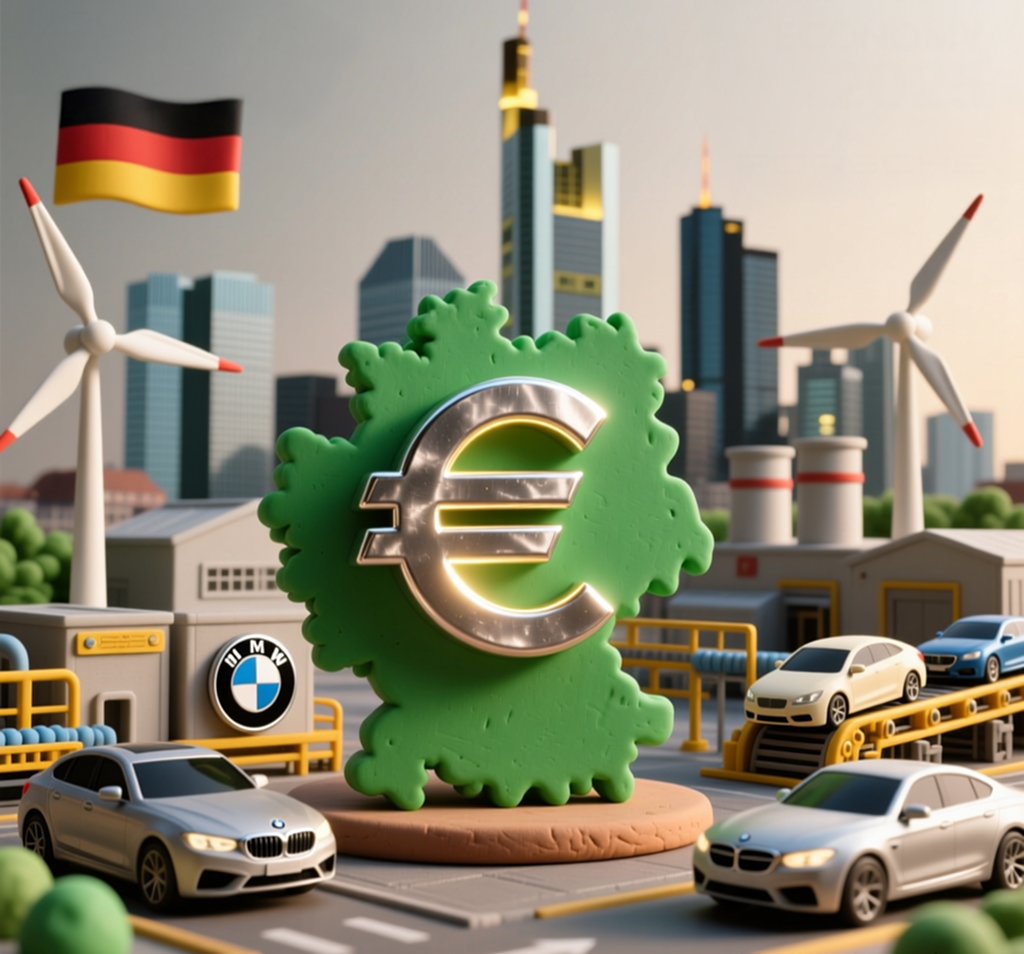
4. Germany: Europe's Industrial and Green Engine Among Top Economies 2025
Germany stands proudly as Europe’s largest economy and fourth among the world’s top economies in 2025, commanding a GDP exceeding $4.6 trillion. Renowned worldwide for precision engineering, export excellence, and advanced manufacturing, Germany sets global standards in automotive technology, machinery, and industrial tools.
Key Growth Sectors Driving German Prosperity
Automobile Industry: Volkswagen, BMW, Mercedes-Benz, and Porsche dominate premium vehicle markets globally, representing German engineering excellence.
Machinery Exports: German-made precision equipment, machine tools, and manufacturing systems are indispensable worldwide.
Chemical Industry Leadership: BASF and other chemical giants supply essential materials for industries globally.
Environmental Leadership: Pioneering renewable energy transition (Energiewende) with 50%+ clean electricity generation from wind, solar, and hydro.
Strong Institutional Framework: Germany’s dual training programs, business-labor cooperation, and apprenticeship systems ensure highly skilled workforce development.
Critical Challenges Confronting the German Economy
Germany’s standing of the top economies in 2025 faces mounting pressures requiring urgent adaptation:
Energy Transition Costs: Moving away from Russian gas and nuclear power creates massive infrastructure expenses and industrial competitiveness concerns.
Aging Demographics: Shrinking workforce poses long-term productivity capacity constraints and pension sustainability challenges.
Trade Dependencies: Over 50% of GDP comes from exports, creating vulnerability to global downturns and trade disruptions.
Chinese Competition: Low-cost manufacturing and EV advances threaten Germany’s auto industry dominance in global markets.
Essential Performance Metrics
- 2025 GDP: $4.6+ trillion in top economies 2025
- Export Share: 47% of GDP
- Renewable Energy Use: 55% of electricity from renewable sources by 2025
- Manufacturing Output: 20% of GDP, highest among major economies
- Export Powerhouse: $1.6 trillion in annual exports, the world’s third-largest exporter
- Green Energy: 50% of electricity from renewable sources by 2025
Germany’s economic policies and performance are tracked at Bundesbank Economic Research.
Global Ranking: #4 in top economies 2025 (Source: Bundesbank, World Bank)

5. India: The Dynamic Emerging Economic Superpower of Top Economies 2025
Overview of India’s Explosive Growth Trajectory
India has surged to become the world’s fifth-largest economy with a GDP exceeding $4 trillion in 2025, marking a historic milestone. Powered by the world’s largest young population, explosive digital economy expansion, and expanding service exports, India is on track to surpass Japan and Germany soon, offering enormous opportunities alongside significant development challenges.
Explosive Growth Factors Propelling India Forward
Young Population Advantage: With a median age of 28, India has possessed a massive workforce for decades, providing a demographic dividend unavailable to aging economies.
IT Services Dominance: Indian tech companies like TCS, Infosys, and Wipro power global digital transformation, generating massive foreign exchange earnings.
Digital Revolution: Over 900 million internet users and the world’s largest fintech ecosystem (UPI, ONDC, AI startups) drive inclusive economic growth.
Startup Ecosystem: India boasts 100+ unicorns with a combined valuation exceeding $350 billion, attracting massive venture capital investments.
Manufacturing Push: “Make in India” attracts Apple, Samsung, and global manufacturers seeking China alternatives and production diversification.
Green Energy Ambitions: Targeting 500 GW of renewable capacity by 2030, positioning India as a clean energy leader and sustainability champion.
Major Development Challenges India Must Overcome
India’s rise among top economies in 2025 must overcome substantial hurdles to sustain momentum:
Infrastructure Deficit: India needs $2+ trillion investment across logistics, energy, and transport to support continued rapid expansion.
Income Inequality: The top 10% hold 70% of the nation’s wealth, threatening social cohesion and broad-based consumption growth.
Education Quality: Skill development and modern education capabilities must improve dramatically to support the knowledge economy transformation.
Regulatory Hurdles: Complex bureaucracy and slow foreign investment approvals constrain business expansion and competitiveness.
Environmental Stress: Air pollution, water scarcity, and climate impacts threaten sustainable growth and quality of life improvements.
Impressive Performance Indicators
- 2025 GDP: $4+ trillion, cementing position in top economies 2025
- GDP Growth Rate: 6-7% annually, fastest among major economies
- Export Value: $750 billion in goods and services
- Tech Workforce: 14 million IT professionals driving the global digital economy
- Renewable Capacity: Targeting 500 GW by 2030
- Mobile Payments: $2+ billion transactions annually via UPI platform
According to the World Bank India Economic Overview, India’s focus on renewable energy, AI innovation, and manufacturing reforms (Make in India 2.0) positions it as a key growth engine for the next decade.
Global Ranking: #5 in top economies 2025, fastest-growing among major economies (Source: World Bank, IMF)
Emerging Economies to Watch: Indonesia & Brazil Reshaping Top Economies 2025
Rising Stars Beyond Traditional Top Economies 2025
Beyond the established top economies by 2025, emerging GDP giants like Indonesia and Brazil are showing rapid acceleration:
Indonesia: Projected GDP $1.8 trillion by 2025; leading ASEAN growth through nickel exports, EV manufacturing, and fintech expansion driven by young demographics.
“All images in this article were generated using AI tools for illustrative purposes. They are designed to visualize concepts and should not be considered actual product photographs.”