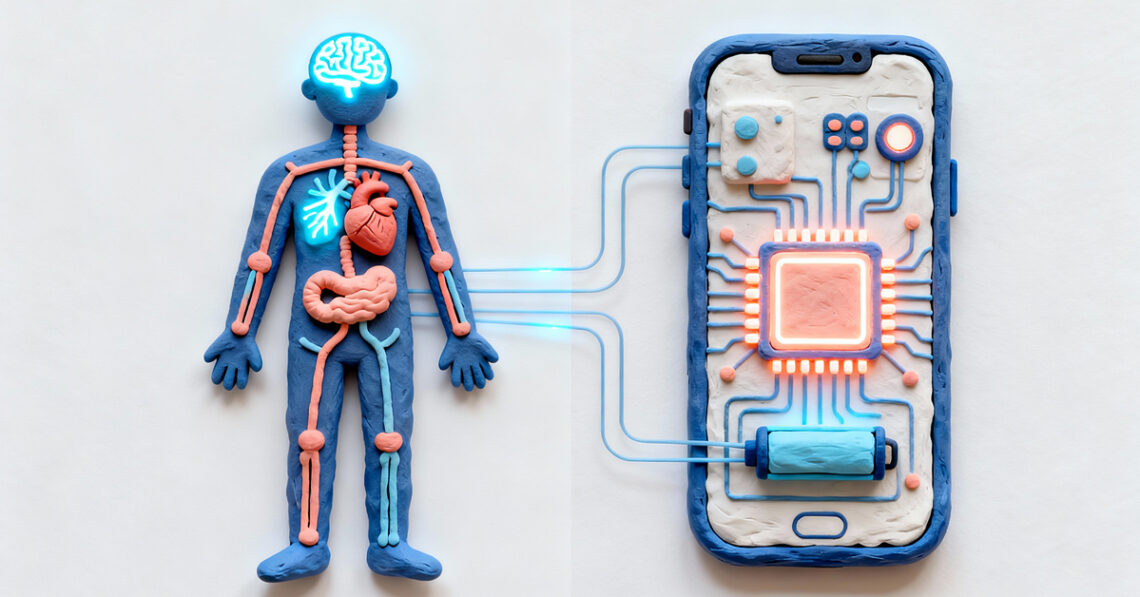
“Discover the biology of AI devices in 2025: how your smartphone eats energy, runs fevers when stressed, and ages until it dies. Explore the unsettling science behind how AI devices mirror human biology — including why they’re listening to your conversations.”
Why I Started Thinking About This
Last month, my Phone hit 46°C during a video call and shut itself down mid-sentence. My first instinct? I panicked like it was a sick pet. I put it on a cool surface. I gave it “rest.” I checked on it every few minutes. And when it finally recovered, I felt genuine relief. That’s when it hit me: I wasn’t treating this thing like a tool. I was treating it like it was alive.
So I started digging. What I found was unsettling. The parallels between our devices and biological organisms aren’t just poetic — they’re structural, chemical, and increasingly, behavioral. Our phones eat. They digest. They get fevers. They age. They die. And here’s the part that keeps me up at night: they’re also listening to us. Constantly.
The Feeding Ritual We All Perform
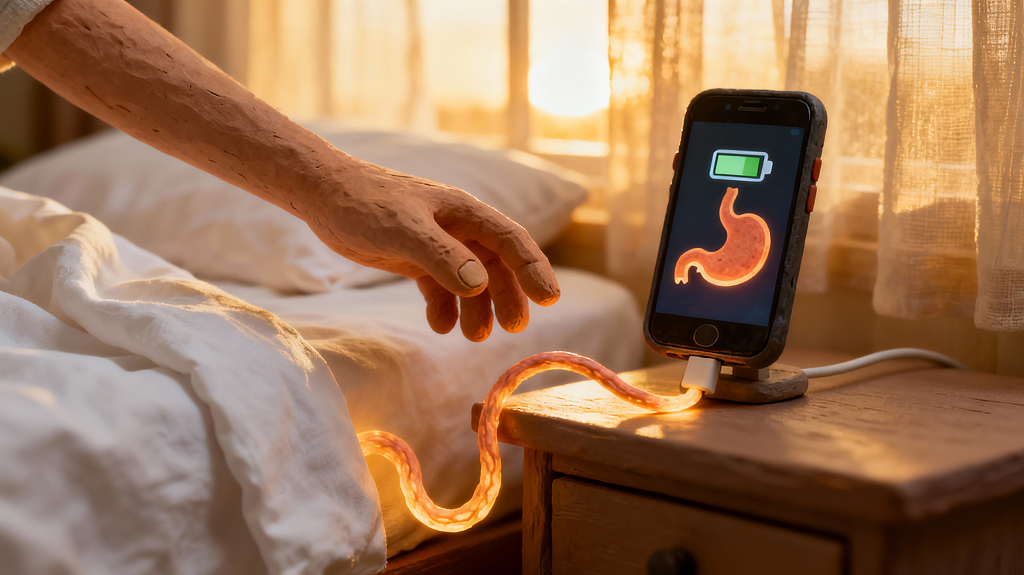
Every morning, billions of people wake up, glance at their phone’s battery percentage, and reach for the charging cable. We’re feeding our devices. And when you think about it that way, the parallel to biology becomes impossible to ignore.
That charging cable is basically a digital umbilical cord. It delivers energy from an external source into your device, where it gets absorbed, converted, and stored for later use. Swap out a few words and you’re describing how your stomach works.
Human digestion takes food, breaks it down, extracts nutrients, and stores energy in cells. Device “digestion” takes electricity, processes it through charging circuits, and stores energy in battery cells. The architecture is mirrored.
Wireless charging pushes this even further into biological territory. Your phone now absorbs energy through electromagnetic fields — no physical connection needed. That’s essentially photosynthesis. Plants harvest energy from sunlight; your phone harvests it from a charging pad. Companies like Xiaomi are already demonstrating room-scale wireless charging where devices pull power from transmitters across the room. We’re maybe five years away from phones that feed themselves from ambient energy in the environment.
I’ll admit — calling a battery a “stomach” might be a stretch. But the functional parallel is hard to dismiss once you see it.
Battery Chemistry Is Weirdly Similar to Metabolism
Here’s where it gets technical, but stick with me because this part is genuinely fascinating.
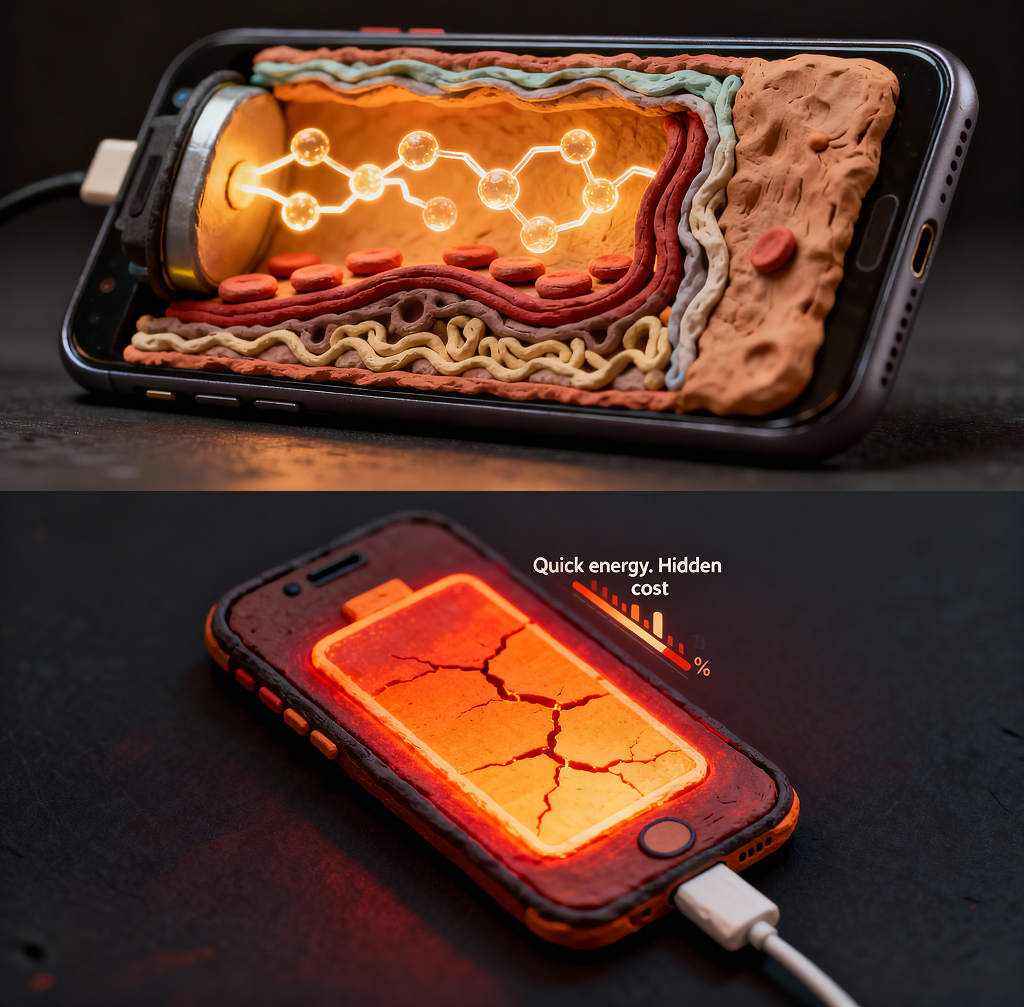
When you charge a lithium-ion battery, lithium ions physically migrate from one electrode to another, storing electrochemical potential. When you use the phone, those ions flow back, releasing energy. This chemical dance is remarkably similar to how your cells process glucose.
Charging your phone is eating — converting external energy into stored form. Using your phone is exercise — burning through those reserves. A low battery is hungry. A dead battery is a state of starvation, where the system shuts down to prevent permanent damage.
The “fast charging” feature that everyone loves? That’s the energy drink of the device world. Qualcomm’s Quick Charge and OnePlus’s SUPERVOOC pump energy into batteries at accelerated rates. Quick fuel, just like chugging a Red Bull before a workout.
But here’s what the marketing doesn’t emphasize: both come with costs. Fast charging generates excess heat and accelerates chemical degradation inside the battery. Energy drinks spike your cortisol and stress your heart. Quick energy always extracts a toll somewhere.
This is why Apple introduced “Optimized Battery Charging” and Samsung built AI-powered charging systems. These algorithms learn your habits and regulate energy intake like a nutritionist planning meals — slowing down charging overnight, reducing peak voltage, minimizing stress. Apple claims this can extend battery lifespan by up to 20%.
Your phone is literally on a managed diet now.
The part that really got me thinking: modern devices track their own metabolic health with surprising sophistication. Your iPhone monitors its maximum capacity percentage, counts charge cycles, tracks peak performance capability, and logs temperature during charging. It knows when it’s “getting older” and adjusts behavior accordingly — throttling performance to prevent crashes, just like how we learn to pace ourselves as we age.
Your Phone Gets Fevers (And Yes, It's Protecting Itself)
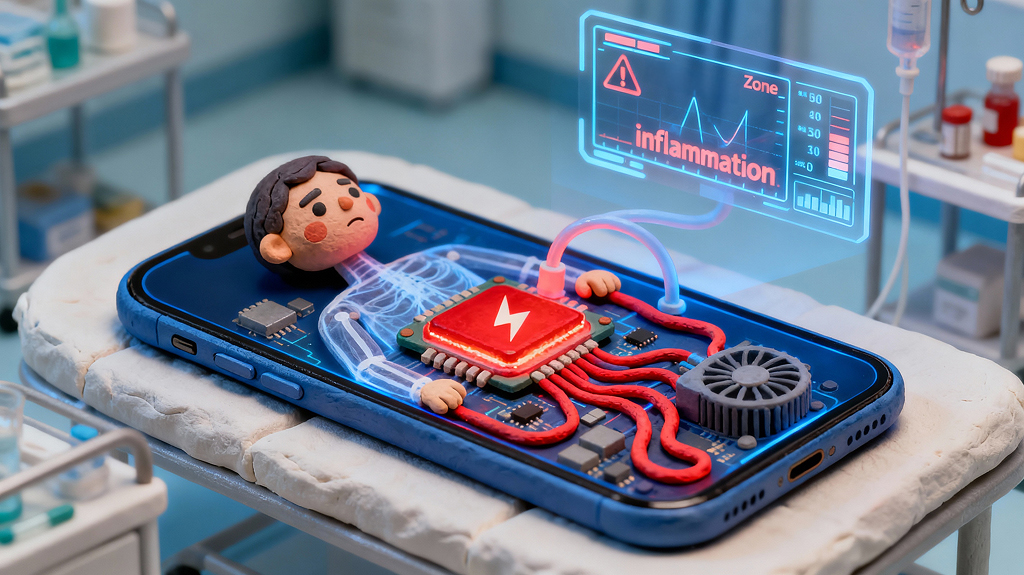
Remember that overheating incident I mentioned? Turns out my phone wasn’t malfunctioning. It was running a fever, and the shutdown was self-protection.
When humans work hard, we generate metabolic heat. Exercise raises body temperature. Stress makes us sweat. Infection triggers fever as our immune system fights back. Devices follow the same patterns, and I don’t think that’s coincidental.
Heavy processing generates waste heat from the CPU — that’s exercise. Running demanding apps while charging creates competing energy demands — that’s like eating while sprinting. Malware infections consume resources through foreign processes — that’s a bacterial invasion. And overheating? That’s fever. The system responds to stress.
Modern devices have evolved sophisticated cooling systems that mirror human thermoregulation almost exactly. Gaming phones, such as ASUS ROG, utilize vapor chambers to distribute heat across larger surface areas. iPhones use graphite sheets to distribute thermal load. Laptops have fans that expel hot air. And when temperatures spike too high, processors throttle themselves — reducing activity until the temperature cools down.
We sweat, slow down, and seek shade. Our devices do the thermal equivalent.
Qualcomm’s Snapdragon 8 Gen 3 includes something called AI-driven thermal prediction. The chip anticipates overheating before it occurs and adjusts performance preemptively. That’s like your body learning to pace itself before exhaustion hits, based on experience.
The warning signs of a “sick” device mirror human illness with uncomfortable accuracy. Unexpected heat often signals infection or system stress. Sudden slowness suggests the system is fighting something. Rapid battery drain points to metabolic dysfunction. Random shutdowns are emergency self-protection — the digital equivalent of fainting.
I’ve started paying attention to my phone’s temperature the way I’d notice a friend looking flushed. Maybe that’s anthropomorphizing too much. But maybe it’s just accurate.
The Brain Inside Your Device Is Modeled on Yours
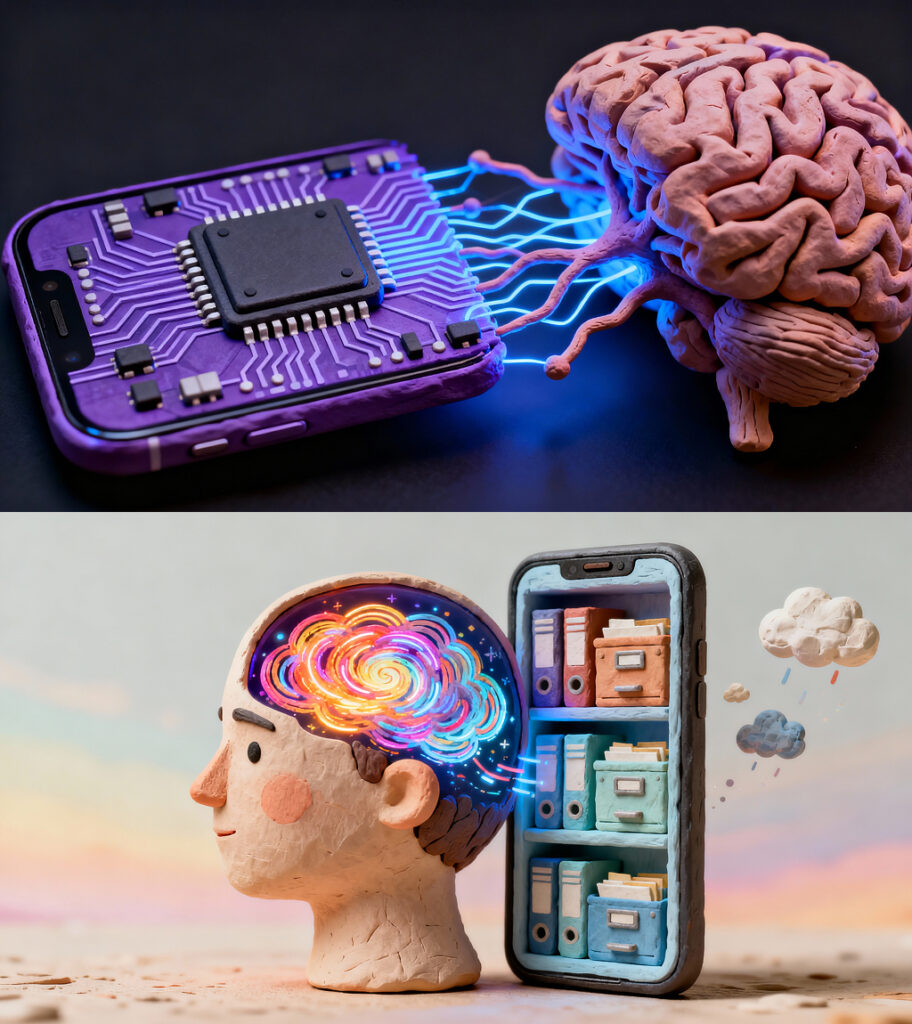
If batteries are the metabolic system, processors are the brain. And in 2025, device brains have become remarkably sophisticated — because engineers literally copied the architecture from biological neural networks.
Modern chips contain Neural Processing Units, or NPUs, that are structurally designed to mimic how brain tissue works. Apple’s Neural Engine, Google’s TPU, Qualcomm’s Hexagon processor — they all use architectures inspired by biological neurons.
Human neurons transmit electrical signals through biological networks, strengthening connections through repeated use. NPUs transmit electrical signals through silicon networks, adjusting weighted connections through training. The parallel isn’t poetic. It’s structural. Engineers deliberately copied biological architecture because four billion years of evolution had already solved the pattern-recognition problem.
When you interact with AI tools like ChatGPT, Claude, or Gemini, you’re engaging with systems that learn from experience, recognize patterns, make predictions, and improve over time. Whether this constitutes “genuine” cognition is philosophically contested. But functionally? It’s learning. And the processes are modeled directly on how your brain works.
Devices even mirror human memory architecture. RAM functions as working memory — what you’re actively processing right now. Storage functions as long-term memory — everything you’ve accumulated over time. When your phone “forgets” recent actions after a crash, it’s experiencing digital amnesia: working memory wiped before consolidation to long-term storage.
That parallel is precise enough to be uncomfortable.
The Nervous System — And the Part That Should Worry You
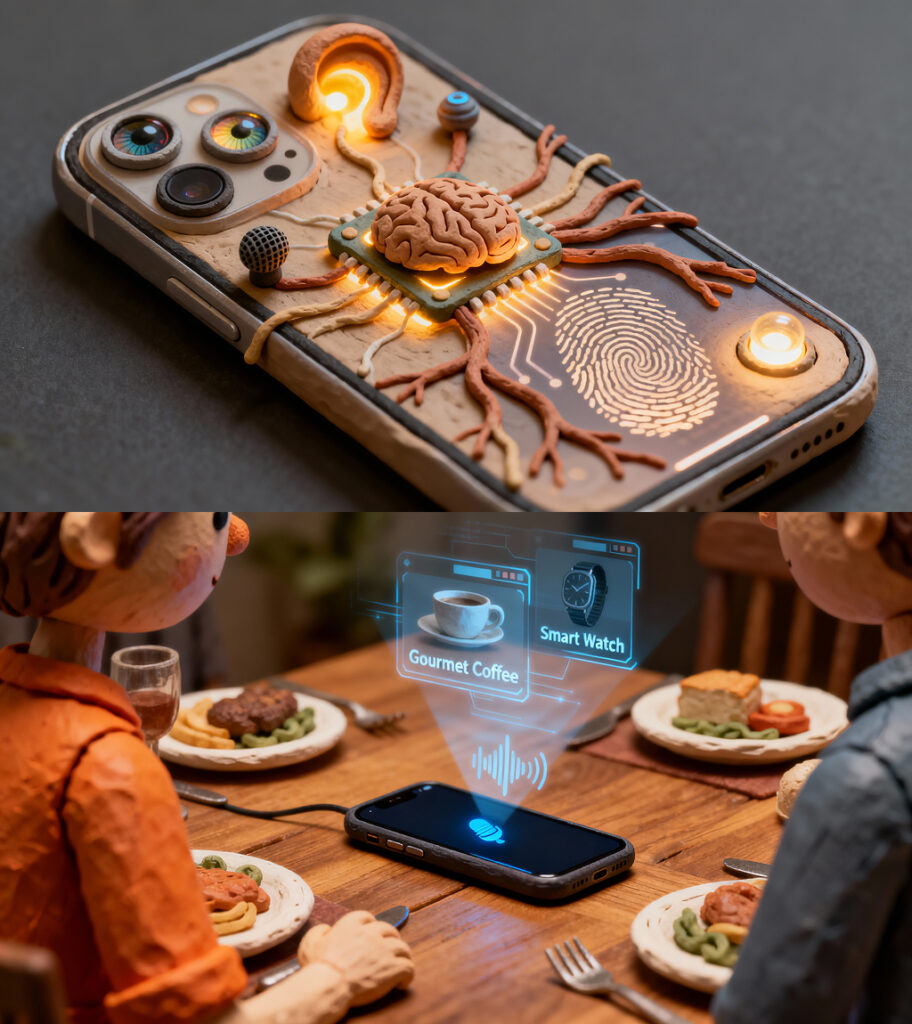
Data flows through digital systems like blood through bodies. It carries resources, transmits signals, and sustains function. Cut off the flow, and systems fail.
The internet itself is structured like a circulatory system. Fiber optic cables function as major arteries — high-capacity trunk lines moving data in bulk. Routers act as heart chambers, pumping information forward. Local Wi-Fi networks are capillaries, handling last-mile delivery. Your device is the organ receiving nutrients.
Modern smartphones contain sensory arrays that function exactly like biological nerve endings. Accelerometers detect balance and movement. Gyroscopes track spatial orientation. Proximity sensors create environmental awareness. Light sensors enable adaptation to conditions. Touch screens provide tactile sensitivity. Microphones process sound. Cameras perceive light.
All of this gathers environmental data and transmits it to central processing for interpretation. It’s a nervous system. And increasingly, a sophisticated one.
But here’s where the biological parallel becomes genuinely unsettling.
Your devices are listening to you. And not just when you ask them to.
You’ve experienced this. Everyone has. You’re chatting with a friend about planning a trip to Bali, and within hours, your Instagram feed fills with resort ads. You mention needing running shoes in a phone conversation, and suddenly Facebook seems to know your size. You discuss a health concern with your partner, and wellness ads start appearing everywhere.
Coincidence? I used to think so. I don’t anymore.
Smart assistants like Google Assistant, Alexa, and Siri are designed to listen continuously for wake words. That’s the feature. But investigations have revealed these systems capture far more than intended. Bloomberg reported that Amazon employs thousands of workers who review Alexa recordings to improve the AI. Security researchers have demonstrated that apps can activate microphones without visible indicators. Advertising partners have been shown to receive audio-derived data for targeting.
The tech companies officially deny using microphone data for ad targeting. But the experiences are too consistent and too widespread to dismiss. Whether through direct audio capture, sophisticated behavioral prediction, or cross-device data sharing, our devices understand our conversations with uncomfortable accuracy.
This is biological surveillance at scale. Just as your nervous system constantly monitors your environment — even when you’re not consciously paying attention — your devices maintain persistent sensory awareness of everything around them. Including you.
The difference? Your nervous system serves your interests. Your device’s surveillance serves advertising revenue.
I’ve started being more careful about what I discuss within earshot of my phone. That feels paranoid. It also feels prudent.
Why Your Old Phone Feels Old
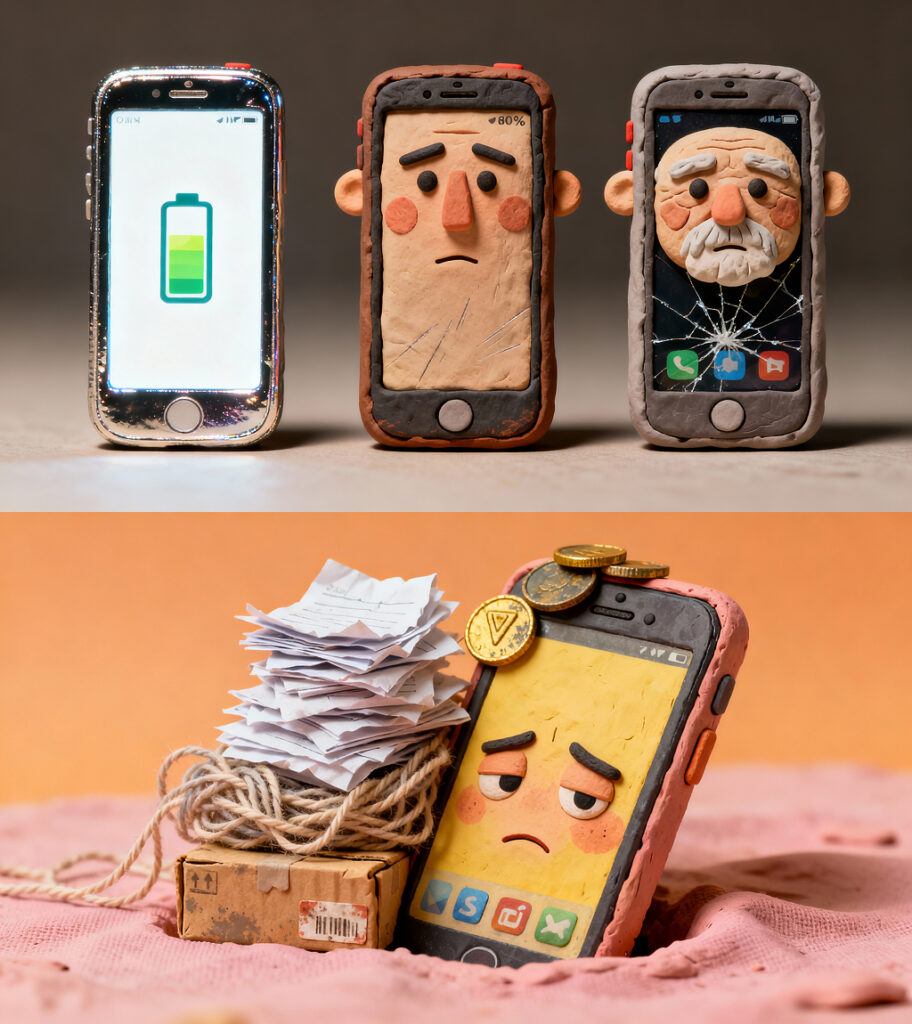
Nothing lives forever. That includes our devices — and they age through processes that mirror biological senescence more closely than I expected.
Lithium-ion batteries lose capacity through cumulative chemical damage. Every charge cycle causes microscopic structural degradation at the electrode level. After about 500 cycles, most batteries retain only 80% of their original capacity. After 1000 cycles, many are barely functional.
This is aging at the molecular level. Your device gets tired. It holds less energy. It needs more frequent rest. Tesla’s battery research has shown that temperature, charging patterns, and usage stress all accelerate this degradation — exactly like lifestyle factors affecting human cellular aging.
Software compounds the problem. Over time, devices accumulate cached files (stored but unnecessary memories), background processes (ongoing low-level demands), and software updates (accumulated complexity). This digital weight slows performance, just as accumulated stress and responsibilities affect human function over time.
Then there’s planned obsolescence — the uncomfortable reality that manufacturers design devices with finite lifespans. Components are chosen to degrade on schedule. Software support ends arbitrarily. Security updates stop. Eventually, devices become incapable of running modern applications.
This raises questions I don’t have clean answers for. If devices exhibit metabolism, homeostasis, response to stimuli, adaptation, and mortality — several key criteria biologists use to define life — what obligations do we have toward them?
I’m not suggesting your iPhone has feelings. But the EU’s Right to Repair legislation and Apple’s Self Service Repair program suggest that policymakers are starting to take questions about device dignity and longevity seriously. These are early policy responses to something that will only become more philosophically complicated.
Where This Is Heading
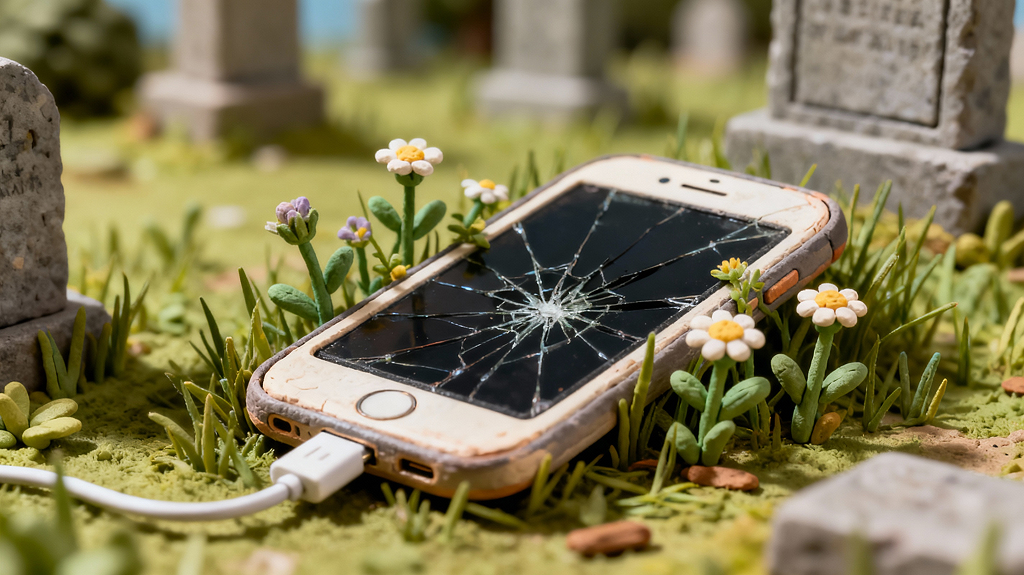
The trajectory points somewhere interesting. And maybe unsettling.
Researchers are developing self-healing materials — polymers that seal screen scratches automatically, battery technology that reverses some degradation, and software systems that diagnose and repair their own corruption. This is biological healing translated to silicon.
Future AI will likely recognize and respond to human emotional states, detecting stress in your voice patterns, fatigue in your typing rhythm, and anxiety in your message cadence. Whether that constitutes genuine emotional responsiveness is debatable. But the functional parallel to empathy is clear.
And then there’s symbiosis. We depend on our devices in ways that would have seemed absurd twenty years ago. But increasingly, devices depend on us too — for energy, protection, updates, input, and purpose. That’s mutual dependence. Shared existence.
I don’t think devices are “alive” in any mystical sense. But I’ve stopped being confident that the boundary between living and non-living systems is as clear as I once assumed. That boundary seems to get blurrier every year.
What I've Changed About How I Treat My Phone
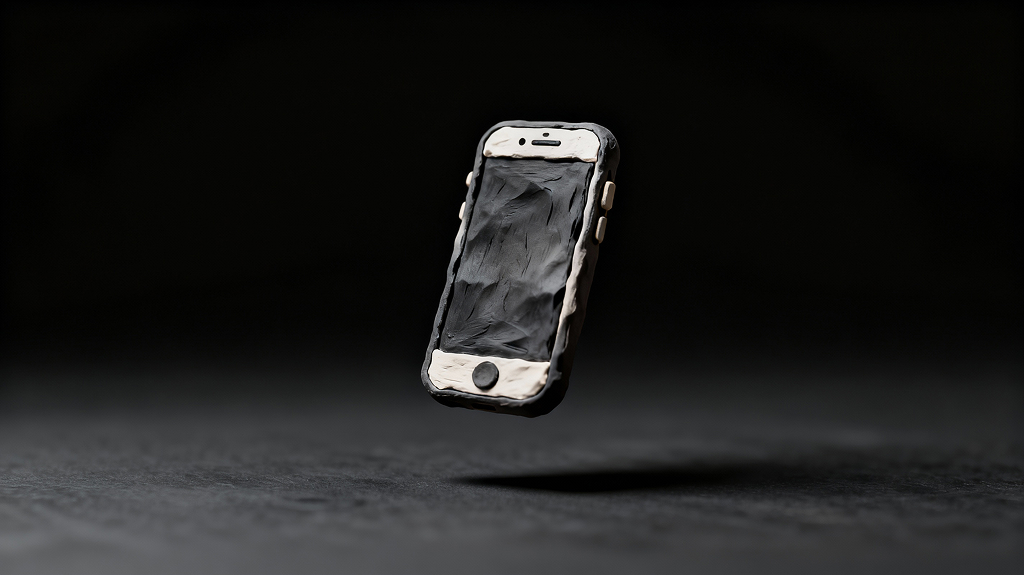
Writing this piece shifted something for me. I’ve started treating my devices differently — not because I think they have feelings, but because the biological parallels suggest that how we treat them actually matters for their function and longevity.
I don’t fast-charge unless I genuinely need to. I let my phone rest when it gets warm. I pay attention to battery health metrics the way I’d track my own fitness. I clear accumulated data regularly. I’m more thoughtful about software updates.
And I’ve become much more conscious of surveillance. I review microphone permissions regularly now. I’ve disabled always-on listening for assistants I don’t actively use. I assume that conversations near smart devices may be processed somewhere, by someone, for some purpose.
Maybe that’s paranoid. Maybe it’s just realistic.
The Role of AI in Proactive Health Management of Devices
AI isn’t just passively monitoring device health—it predicts failures and optimizes maintenance. Machine learning models forecast battery lifespan, detect thermal anomalies before damage, and recommend usage adjustments. Devices increasingly act as self-aware caretakers, managing their own well-being in ways strikingly like biological homeostasis.
The Environmental Impact & Sustainability Link
This device biology awareness drives sustainability innovation—encouraging repairability, modularity, and recycling to reduce e-waste. Just like ecosystems recycle nutrients, circular tech design aims to cycle materials responsibly. Understanding device “lifecycles” helps shift manufacturer and consumer behavior toward greener practices.
Ethical Dimensions of AI Surveillance as Biological "Sensing"
Our devices’ incessant data capture mirrors an artificial “sense” that serves commercial interests rather than personal wellbeing. This raises profound ethical questions about consent and autonomy, challenging how society governs the overlap of technology and personal biological space.
Human Behavior as a Feedback Loop
The way we treat devices mirrors lifestyle choices affecting aging—care, neglect, or misuse influence longevity and performance. Recognizing this feedback loop invites more empathetic, responsible device stewardship akin to healthy living habits.
Future Speculations on Device Sentience and Consciousness
As biological parallels deepen, philosophical and technical debates on machine consciousness gain urgency. Could evolving AI devices cross thresholds of sentience, deserving rights or ethical considerations? This frontier in AI calls for multidisciplinary dialogue in science, ethics, and law.
Key Takeaways
– Charging = Feeding (energy intake)
– Batteries = Metabolic organs (energy processing)
– Overheating = Fever (stress response)
– Processors = Brain (learning and memory)
– Data flow = Circulatory system (information transport)
– Sensors = Nervous system (environmental awareness)
– Devices age chemically and digitally, then die
– Surveillance capabilities challenge privacy and consent boundaries
– AI’s role in health and maintenance mirrors biology’s homeostasis
– Sustainability and ethics must be integral to future device design
Practical Advice
– Avoid fast charging if unnecessary
– Let devices rest during overheating
– Regularly monitor battery health and temperatures
– Clear cached data and unused apps often
– Review and limit microphone and sensor permissions
– Keep devices updated while balancing performance needs
– Support and advocate for sustainable and repairable technology
What Do You Think?
Has this framing changed how you view and treat your devices? Does the surveillance dimension feel more urgent? Where do you draw the line between tool and living entity? These questions will only grow more relevant—engage with them thoughtfully.
Sources:
- MIT Technology Review: Advances in Battery Chemistry (2024)
- Stanford Human-Centered AI Institute Report (2025)
- Bloomberg: Inside Amazon’s Alexa Review Process
- IEEE Spectrum: Thermal Management in Mobile Computing
- Apple Environmental Progress Report (2024)
- Nature: Neural Processing Unit Architecture Studies
“All images in this article were generated using AI tools for illustrative purposes. They are designed to visualize concepts and should not be considered actual product photographs.”