🔑 Key Takeaways
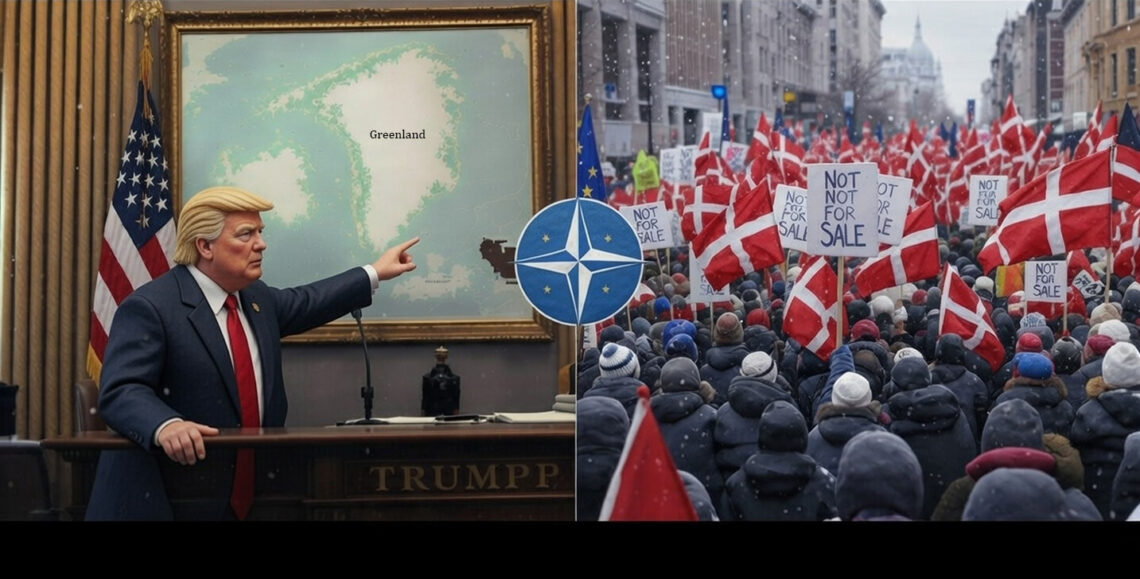
Historic Trigger: President Trump announced 10-25% tariffs on eight NATO allies after European troops deployed to Greenland for Operation Arctic Endurance, which he called a threat to “global security.” This move, referred to as Trump’s Greenland Tariff, has sparked significant controversy and debate.
EU’s Nuclear Option: France is pushing to activate the Anti-Coercion Instrument—the EU’s trade “bazooka”—that could shut US companies out of the 500-million consumer European market in response to Trump’s Greenland Tariff.
Supreme Court Showdown: A February 2026 ruling will determine if Trump can legally use emergency powers to impose tariffs for territorial acquisition, potentially reshaping presidential authority forever as a result of his Greenland Tariff strategy.
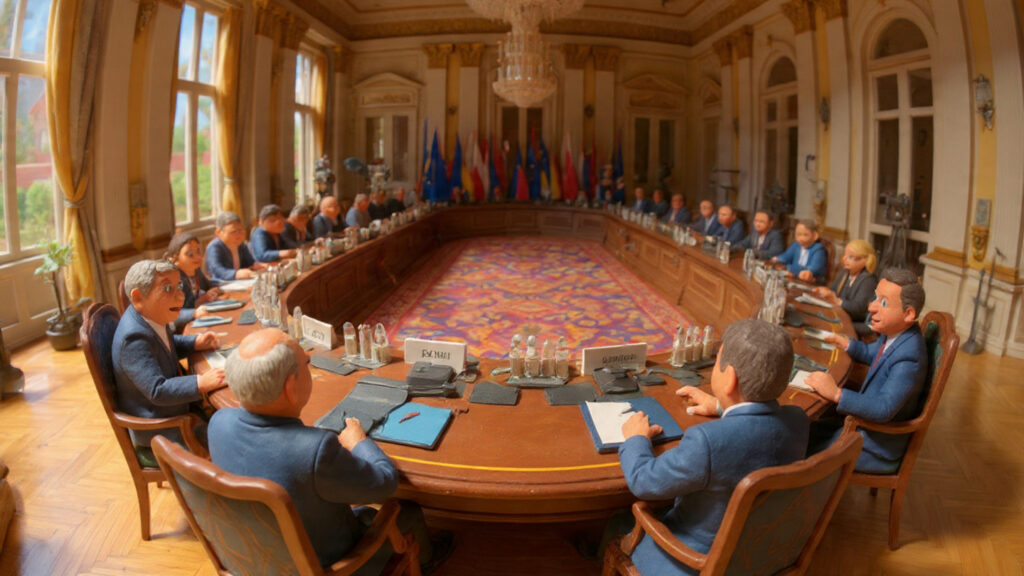
European Union leaders convene an emergency session to address the unprecedented tariff threat from the United States, known as Trump’s Greenland Tariff.
In a dramatic escalation threatening the Western alliance, President Donald Trump announced sweeping tariffs on eight European NATO members, directly tying economic penalties to America’s pursuit of purchasing Greenland from Denmark. This extraordinary move, unveiled through Truth Social on January 17, 2026, has transformed diplomatic tension into a full-blown constitutional crisis that could fundamentally reshape transatlantic relations.
The Trigger: Operation Arctic Endurance Sparks Presidential Retaliation
The immediate catalyst wasn’t merely European opposition to Greenland’s acquisition—it was the deployment of European troops to the Arctic island under Operation Arctic Endurance. Trump characterized the eight countries as having “journeyed to Greenland, for purposes unknown,” calling this “a very dangerous situation for the Safety, Security, and Survival of our Planet.”
This reveals a critical mischaracterization. Denmark explicitly invited these NATO allies to participate in joint Arctic defense exercises with full transparency. The operation involves fewer than 40 foreign personnel joining approximately 150 Danish troops—hardly an invasion force. France sent 15 mountain infantry specialists, Germany deployed 13 reconnaissance members, while Sweden, Norway, and the UK contributed three, two, and one officer respectively for cold-weather training and coordination meetings.
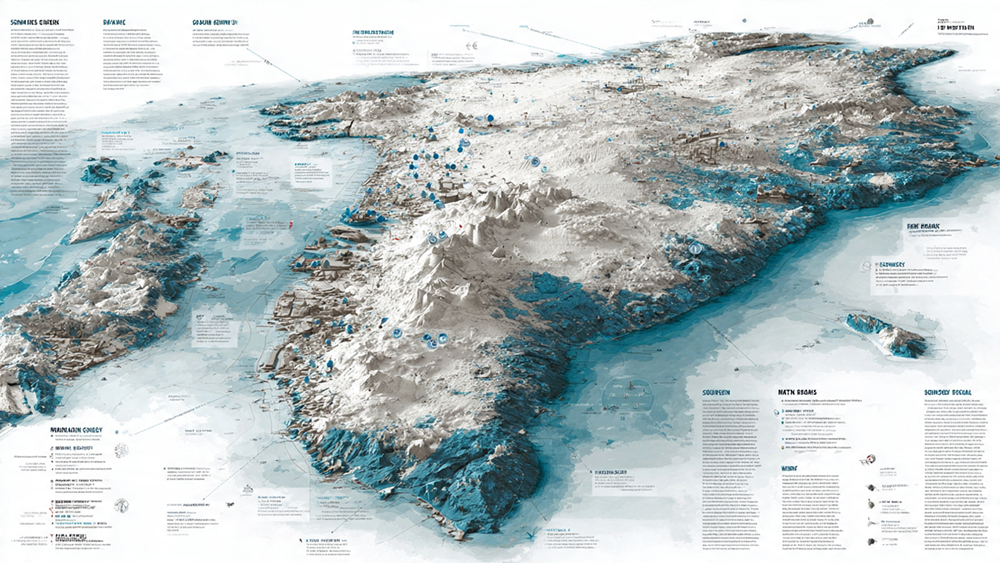
Map illustrating the scale and location of Operation Arctic Endurance deployments across Greenland.
This deployment is historically significant due to its context. It marks the first time in NATO’s 77-year history that allied troops have been deployed specifically to demonstrate collective defense against potential aggression from another alliance member, rather than against an external adversary. While European leaders carefully avoided explicit anti-American messaging, the underlying message was clear: any violations of sovereignty would prompt a response.
The Tariff Ultimatum: Economic Coercion as Territorial Strategy
Trump specified that a 10% tariff on all goods from Denmark, Norway, Sweden, France, Germany, the United Kingdom, the Netherlands, and Finland would take effect February 1, 2026, escalating to 25% on June 1 unless an agreement is reached for the “complete and total purchase of Greenland.” This represents one of the most aggressive uses of economic leverage against allies in modern American history.
The legal foundation remains contested. Trump appears to invoke the International Emergency Economic Powers Act, though IEEPA makes no explicit mention of tariffs. The Supreme Court is expected to rule in early February 2026 on whether Trump can legally use emergency powers to impose tariffs—a decision that could fundamentally constrain or validate executive authority over international commerce.
The economic impact would be substantial. The EU stands as America’s largest trading partner, meaning these tariffs would affect billions in bilateral trade. The targeted nations already face existing tariff frameworks—the EU at 15% and UK at 10% under 2025 deals—raising questions about whether new levies would void these agreements or layer additional charges.
Why Greenland? Strategic Resources and Military Positioning
Trump’s fixation reflects genuine strategic anxieties about Arctic security and resource control in an era of intensifying great power competition. From a military perspective, Greenland occupies irreplaceable geography for Arctic surveillance and missile defense architecture.
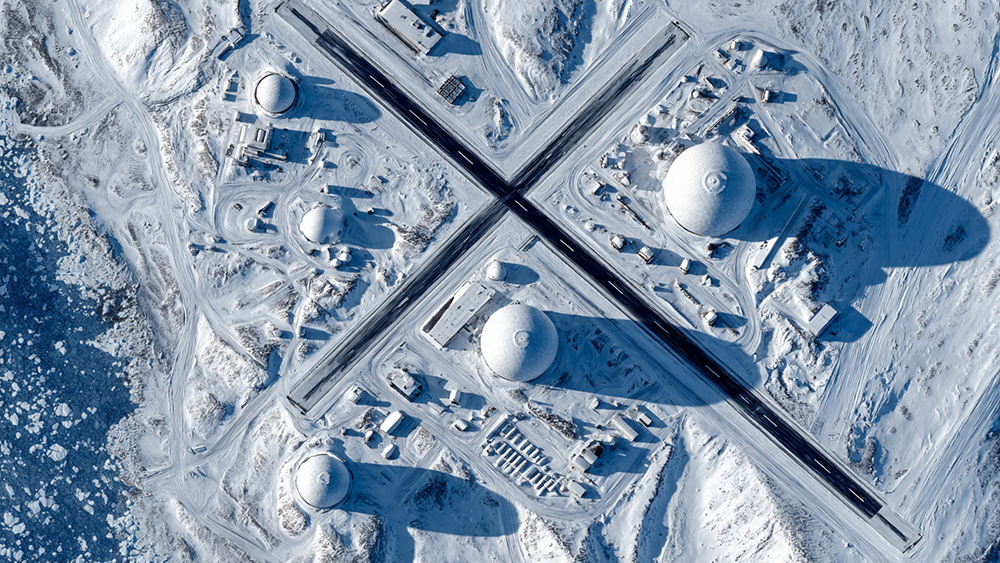
Pituffik Space Base (formerly Thule Air Base), America’s northernmost military installation in Greenland
The United States maintains Pituffik Space Base on the island’s northwest coast, housing early warning systems and satellite tracking. Trump specifically referenced his planned “Golden Dome” missile defense system, arguing that modern weapons systems make control of Greenland especially important. This next-generation shield would supposedly require Greenlandic territory to achieve full effectiveness against hypersonic missiles from Russia and China.
The resource dimension adds strategic urgency. Greenland possesses globally significant rare earth deposits critical for manufacturing high-performance magnets, electric vehicle batteries, wind turbines, and advanced military equipment. Geological surveys estimate approximately 36 million tonnes of rare earths in the Kvanefjeld and Tanbreez deposits—potentially the world’s second-largest reserves after China.
China’s dominance in rare earth processing has created supply chain vulnerabilities. Beijing controls approximately 70% of global rare earth mining and 90% of processing capacity, granting it potential leverage over critical technology. Chinese state-owned enterprises have attempted Arctic expansion through research expeditions, infrastructure investments, and natural resource acquisitions. Trump’s warnings about China and Russia wanting Greenland, while hyperbolic, reflect genuine concerns.
However, experts question whether outright acquisition represents the optimal solution. The United States already enjoys extensive basing rights, intelligence cooperation, and preferential resource access through existing agreements with Denmark. American companies face no legal barriers to Arctic investment—obstacles are primarily economic (high extraction costs) and environmental, neither of which sovereignty would resolve.
Europe's Unified Rejection and Nuclear Option Threat
The European response has been remarkably swift and unified. Leaders from the eight targeted nations issued a joint statement warning that tariff threats “undermine transatlantic relations and risk a dangerous downward spiral,” pledging coordinated resistance.
European Response at a Glance
| Country | Leader Reaction | Specific Action Taken |
|---|---|---|
| Denmark | “Sovereignty is not for sale.” | Joint Arctic Command Deployment |
| Germany | “Crossing a new line.” | 13-member reconnaissance team to Nuuk |
| UK | “Completely wrong.” | Military officer liaison sent |
| France | “Deploy the ACI.” | Pushing for EU Trade “Bazooka” |
| Sweden | “Won’t be blackmailed.” | 3 officers to Operation Arctic Endurance |
| Norway | “Unacceptable threat to allies.” | 2 officers deployed |
| Netherlands | “Stands with Denmark.” | Diplomatic support mission |
| Finland | “Violates alliance principles.” | Arctic cooperation team |
UK Prime Minister Keir Starmer declared applying tariffs on allies for pursuing collective NATO security is “completely wrong,” while Swedish Prime Minister Ulf Kristersson stated his nation won’t “let ourselves be blackmailed.” German Chancellor Olaf Scholz characterized the threat as crossing a “new line” endangering the entire transatlantic partnership.
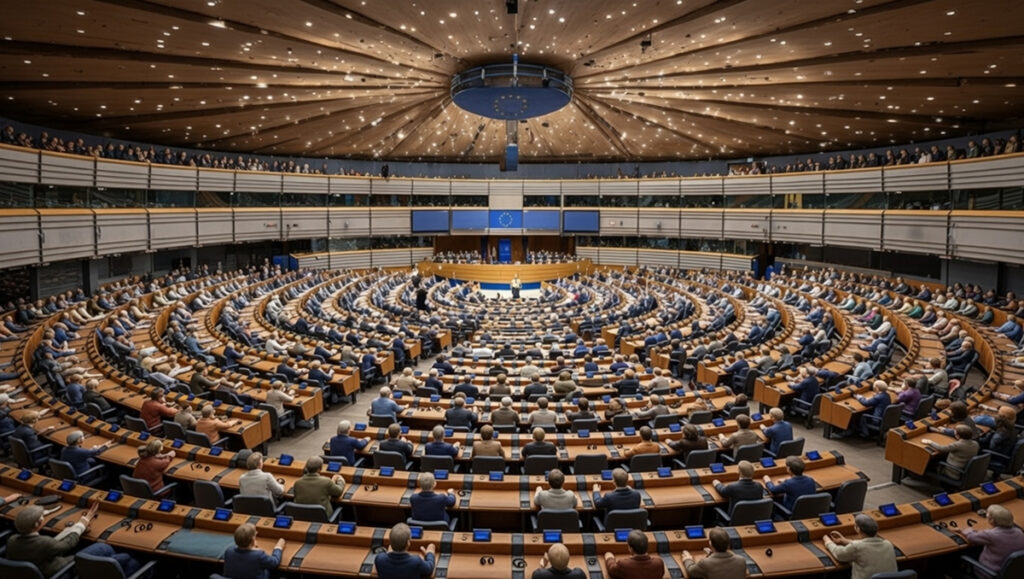
European Parliament leaders discuss unprecedented trade retaliation against the United States
The most significant response may be procedural. French President Emmanuel Macron is pushing the EU to deploy its “anti-coercion instrument”—a weapon never used since its 2023 adoption. This trade “bazooka” represents Brussels’ most powerful economic countermeasure, allowing the bloc to shut off American access to the 500-million consumer European market, limit trade licenses, restrict public procurement access, and block American service providers from operating in EU states.
The Anti-Coercion Instrument was specifically designed with the United States and China in mind. Under EU legislation, economic coercion exists when a third country “applies or threatens to apply measures affecting trade or investment” to force policy changes. Trump’s explicit linkage of tariffs to Greenland’s purchase meets this definition precisely.
European ambassadors convened an emergency meeting on Sunday, January 18, to coordinate response options. The speed of this mobilization demonstrates Brussels regards Trump’s threat as an existential challenge to European sovereignty, demanding the strongest counter-response.
The Greenlandic Voice: Indigenous Resistance to Foreign Control
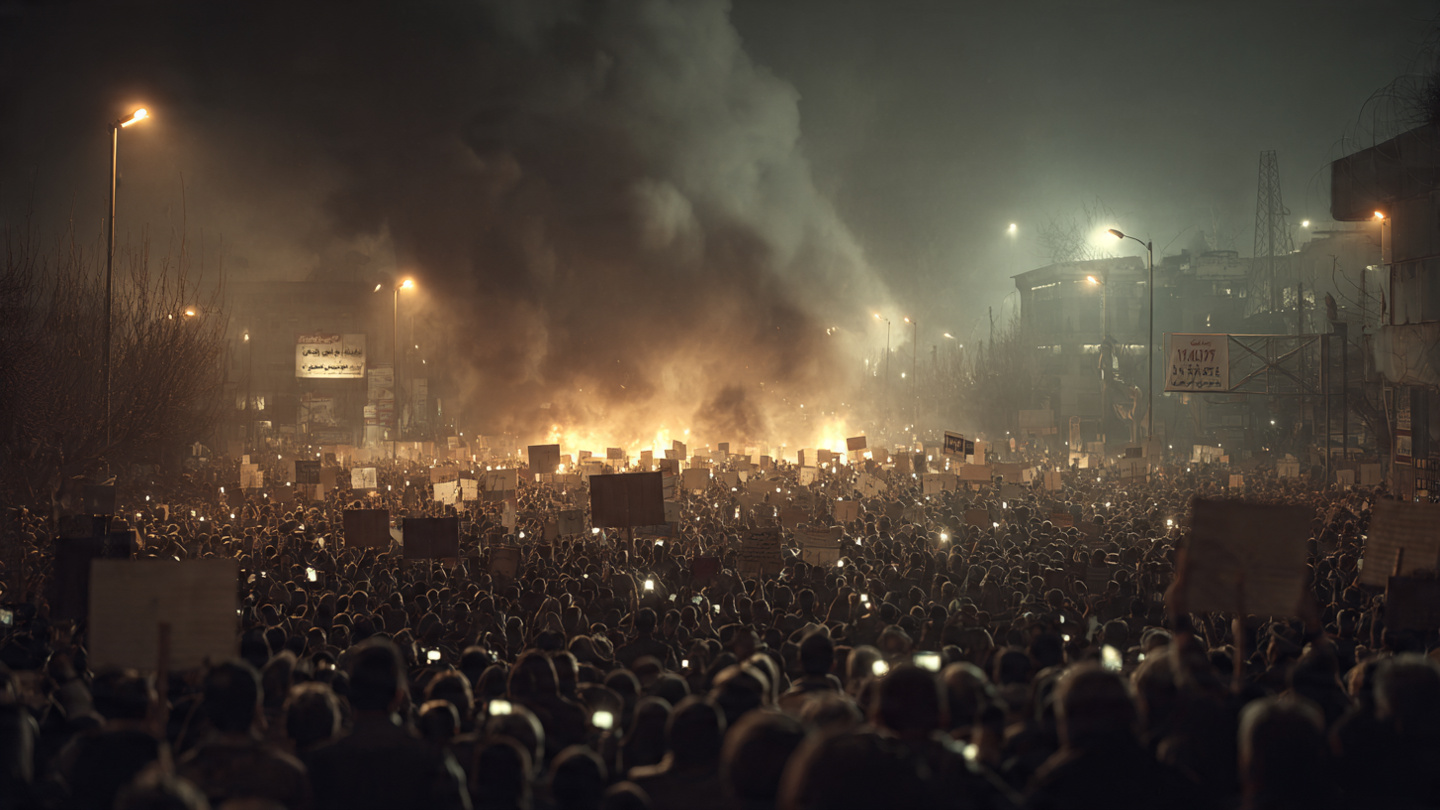
Greenland’s indigenous Inuit population delivered its own unmistakable message through unprecedented mobilization. Approximately 5,000-7,000 protesters rallied in Nuuk on January 17—nearly one-third of the capital’s population—chanting “Kalaallit Nunaat” (Greenland’s name in Greenlandic) as they marched to the U.S. Consulate. Demonstrators waved banners reading “Greenland is not for sale” and “Yankee go home.”
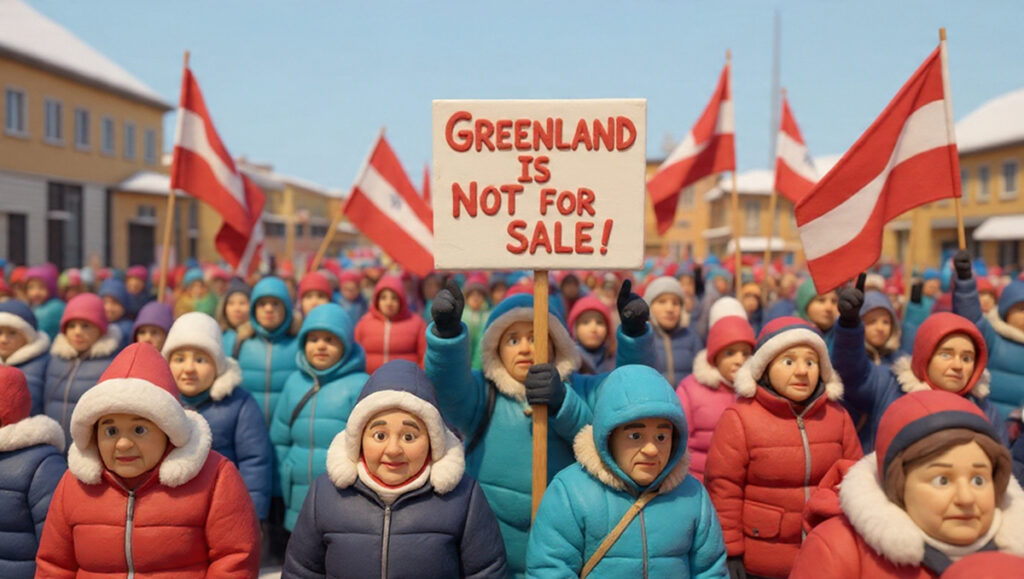
Thousands of Greenlanders march through Nuuk protesting American territorial ambitions
Polling from January 2025 shows 85% of Greenlanders reject joining the United States, while only 6% support such a move. This overwhelming rejection reflects collective determination to preserve indigenous autonomy—89% of Greenland’s population is Inuit or Inuit-Danish with deep cultural heritage considered non-negotiable.
Greenland’s Foreign Minister Vivian Motzfeldt expressed gratitude for European support, stating she was “thankful and hopeful for diplomacy and allieship to prevail.” Premier Jens-Frederik Nielsen told a Copenhagen audience: “We choose the Greenland we know today, as part of the Kingdom of Denmark,” drawing a standing ovation.
Congressional Pushback Reveals Bipartisan Opposition
Trump’s strategy faces significant domestic resistance. Senate Minority Leader Chuck Schumer announced Democrats will introduce legislation to block the tariffs, calling Trump’s quest “quixotic” and the tariff strategy “doubling down on stupidity.”
More significantly, bipartisan Senate delegations traveled to Copenhagen and Greenland to contradict presidential messaging. An 11-member delegation led by Senators Chris Coons (D-Del.) and Lisa Murkowski (R-Alaska) met with Danish and Greenlandic leaders, stating their mission was to “restore trust” and “highlight more than 200 years of friendship.”
Senator Thom Tillis (R-N.C.) stated that pursuing acquisition “is bad for America, bad for American business and bad for America’s allies,” arguing it threatens NATO stability. The delegation emphasized: “There is no need for a costly acquisition when Danish and Greenlandic allies are eager to work with us on Arctic security, critical minerals, and other priorities under long-standing treaties.”
Chicago Council-Ipsos polling found 85% of Americans oppose using military force to make Greenland part of the United States, demonstrating public opinion strongly rejects acquisition through coercion.

Economic and Legal Implications
The tariff announcement has generated financial market volatility. European stocks experienced pressure as investors priced in sustained trade warfare risks. The crisis threatens to unravel the U.S.-EU trade deal finalized in 2025, which established tariff caps and regulatory cooperation for business stability.
The constitutional questions may prove most consequential. If the Supreme Court upholds Trump’s expansive interpretation of emergency powers, future presidents could weaponize tariffs for almost any foreign policy objective. Conversely, a ruling against the administration would reassert congressional primacy over international commerce.
Financial analyst Peter Schiff warned that weaponizing dollar reserve status and American market access for territorial acquisition could accelerate international efforts to reduce U.S. dependence—precisely the outcome benefiting rivals like China in long-term great power competition.
Three Paths Forward
The Escalation Spiral: If Trump implements tariffs and Europe activates the Anti-Coercion Instrument, an unprecedented trade war between the world’s largest economic blocs would severely damage Western prosperity and unity. Supply chains built over decades would fracture. Russia and China would benefit enormously from divided democracies focused on internal conflict rather than coordinated responses to external challenges.
The Negotiated Settlement: Diplomatic resolution might see the U.S. securing enhanced resource access and expanded military cooperation without outright acquisition. This could involve American infrastructure investment in Greenland, priority access to critical minerals through long-term contracts, and joint U.S.-Danish-Greenlandic governance of Arctic security—addressing Trump’s concerns while respecting sovereignty.
The Legal Resolution: A Supreme Court ruling blocking Trump’s tariff authority would force pursuit of Arctic objectives through conventional diplomacy and congressional appropriations. This would reassert traditional checks and balances, though underlying strategic tensions would remain unresolved.
Conclusion: Democratic Principles vs. Raw Power
The Greenland tariff crisis has evolved into a fundamental test of whether economic might can override sovereignty principles within the democratic alliance. Trump’s unprecedented economic pressure has united European leaders in resistance, mobilized Greenland’s indigenous population in protest, and sparked bipartisan congressional opposition.
The coming weeks will determine whether this standoff escalates into lasting transatlantic damage or catalyzes creative diplomacy addressing legitimate security concerns while respecting self-determination. The Supreme Court’s pending decision could fundamentally alter the strategic landscape. European decisions about activating the Anti-Coercion Instrument will signal how seriously Brussels takes sovereignty violations.
What remains certain: Arctic importance will only grow as climate change opens new shipping routes and makes resource extraction more viable. How democracies navigate competing claims will shape the international order for decades, establishing precedents about whether territorial ambitions can be pursued through economic coercion or whether sovereignty remains inviolable.
The stakes transcend Greenland itself—this crisis will define whether the Western alliance can adapt to 21st-century challenges while preserving the values distinguishing democracies from authoritarian alternatives, or whether great power competition will fracture partnerships forged over generations. As European ambassadors meet in an emergency session and Greenlandic protesters march through Nuuk’s streets, the world watches to see whether democratic principles or raw power will prevail in shaping the Arctic’s destiny.
“All images in this article were generated using AI tools for illustrative purposes. They are designed to visualize concepts and should not be considered actual product photographs.”